A used car can look perfect in a showroom or a seller's driveway. The engine starts, the AC blows cold, and the dashboard stays clear. Then, five kilometres into the drive home, the gearbox thumps into third and a vibration creeps through the steering wheel.
A road test is important because many expensive faults only appear when the car is moving, warm and under load. Gearbox slips, brake judder, worn suspension, wheel bearing noise, and overheating rarely show up on a parked car. A proper road test checks each system in real traffic and speeds, so you find problems before you pay, not after.
The Used Car Market in Numbers
The UAE used car market is large and fast-moving. An estimated 1.02 million used vehicles changed hands in the UAE in 2025, about 3.8 times the country's new passenger car sales, according to Ken Research. High turnover means many cars pass through several owners, dealers and auctions in a short time.
With that volume comes risk. UAE courts have voided sales after buyers found rolled-back odometers, including cases with mileage cut by tens of thousands of kilometres. A careful road test, paired with a computer scan, is one of the fastest ways to spot a car that drives older than its odometer says.
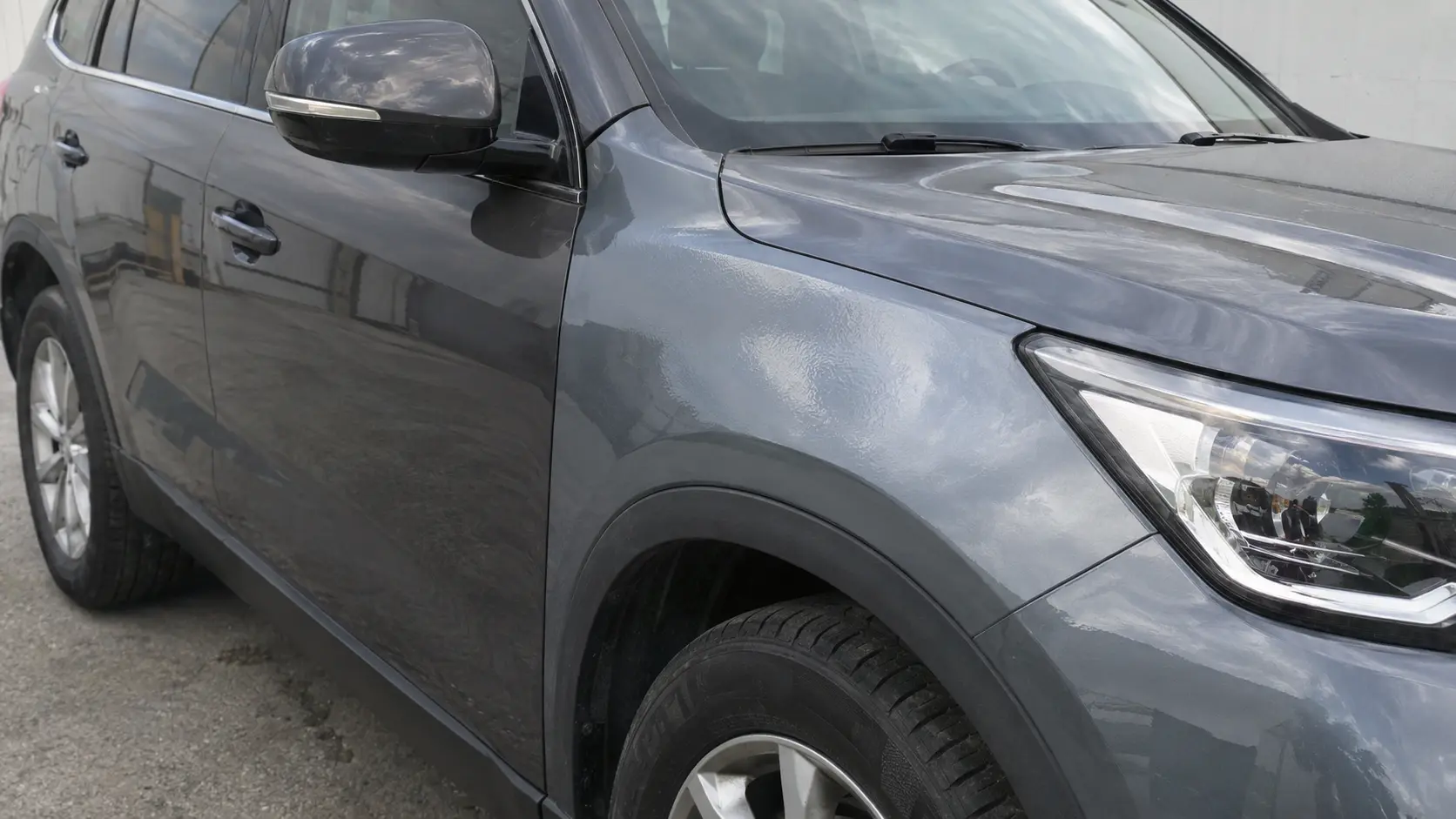
What a parked check findsBody damage and repaint
- What only a road test finds
- Gearbox slip, delay or harsh shifts
What a parked check findsFluid leaks and levels
- What only a road test finds
- Brake judder and pulling
What a parked check findsTyre tread and age
- What only a road test finds
- Wheel bearing and CV joint noise
What a parked check findsStored fault codes
- What only a road test finds
- Faults that only trigger when warm
What a parked check findsInterior wear
- What only a road test finds
- Suspension knocks over bumps
What a parked check findsBattery health
- What only a road test finds
- Steering drift and alignment issues
What a parked check findsCold AC at idle
- What only a road test finds
- AC performance under load in traffic
What a Proper Road Test Reveals
Gearbox and Transmission Faults
Automatic gearboxes are among the most expensive parts to repair. A road test shows delayed engagement from park to drive, slipping under acceleration, flare between gears and harsh downshifts when slowing. Dual-clutch gearboxes may judder when pulling away in slow traffic.
Engine Performance Under Load
An engine can idle smoothly and still struggle under load. On the road, look for hesitation, loss of power on inclines, turbo whistle or lag, and smoke in the mirror under hard acceleration. Misfires often appear only when the engine is warm.
Brakes
Braking from 60 to 80 km/h shows whether the car stops straight and smoothly. A pulsing pedal points to warped discs. Pulling to one side can mean a sticking caliper. A soft pedal suggests air or old fluid in the system.
Steering and Alignment
On a straight road, the steering wheel should sit centred, and the car should track straight. Drift, a crooked wheel or heavy steering point to alignment, tyre, or steering rack issues. Clunks on full lock can indicate worn joints.
Suspension and Wheel Bearings
Speed bumps and rough patches expose worn shocks, bushes, and links. A humming or growling noise that rises with speed often comes from a wheel bearing. Clicking on tight turns points to CV joints.
Cooling System and AC
Dubai traffic is a real test for cooling systems. Watch the temperature gauge during slow traffic and after a fast run. Check that the AC stays cold while the car idles in traffic, not just when parked with the engine revving.
Warning Lights That Appear Later
Some faults only trigger after the engine warms up or after a set distance. Lights for ABS, airbag, engine, or gearbox may come on mid-drive. A seller who keeps test drives very short may be hiding these.
How to Do a Road Test the Right Way
StageCold start
- What to do
- Ask that the engine is not warmed up before you arrive
- What to watch for
- Rattles, smoke, slow cranking
StageLow-speed driving
- What to do
- Drive through car parks and slow streets
- What to watch for
- Gear engagement, clunks, steering noise
StageCity traffic
- What to do
- Stop and go for at least 10 minutes
- What to watch for
- Temperature gauge, AC, gearbox judder
StageHighway run
- What to do
- Reach 100 to 120 km/h where legal
- What to watch for
- Vibration, wind noise, drift, wheel bearing hum
StageBraking test
- What to do
- Brake firmly from 60 to 80 km/h in a safe place
- What to watch for
- Pulling, pulsing, noise
StageBumps and turns
- What to do
- Drive over speed bumps and make full-lock turns
- What to watch for
- Knocks, clicks, steering clunks
StageAfter the drive
- What to do
- Leave the engine running and check underneath
- What to watch for
- Fresh leaks, smells, warning lights
Plan for at least 20 to 30 minutes of mixed driving. Turn the radio off and keep windows up for part of the drive so you can hear the car.
Before You Drive: Legal and Safety Points
In the UAE, you need a valid licence, and the car must be insured for you to drive it. Confirm with the seller or dealer that their policy covers test drives. Never drive an unregistered car on public roads. If you cannot drive the car yourself, let a professional inspector run the road test while you ride along.
The red flags found during a road test often match faults in the computer scan, so the two checks work best together.
Why a Professional Road Test Goes Further
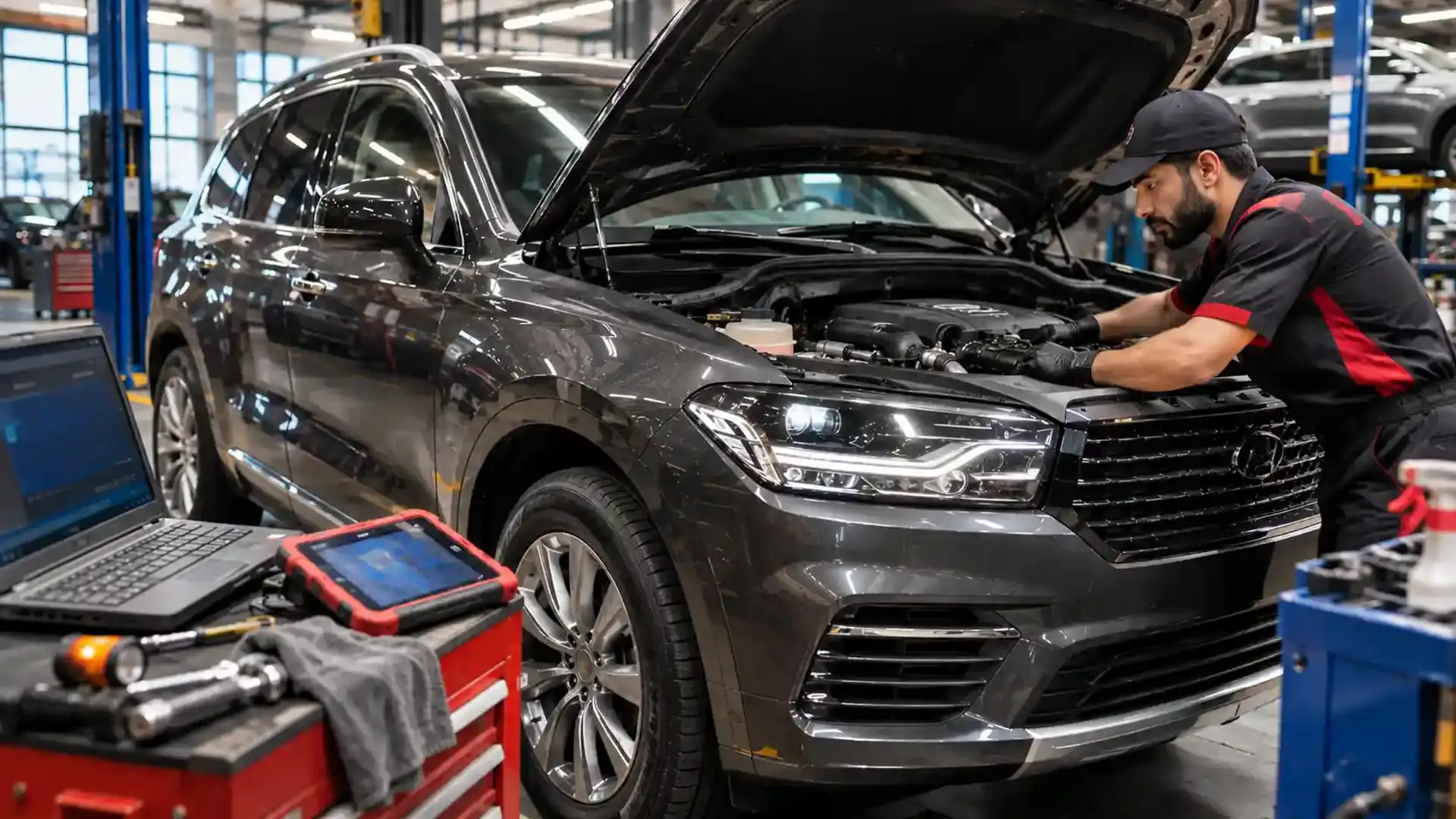
Most buyers drive a car for 10 minutes and focus on comfort. A trained inspector follows a set route and checks specific parameters, compares the car's behaviour with what the model should feel like, and links symptoms to fault codes.
Our pre-purchase inspection includes a road test covering 8 parameters, alongside a 150-point check, a scan of 20 or more control modules where supported, and paint depth readings on every panel. The whole inspection takes about 60 to 90 minutes at the car's location in Dubai.
When to Walk Away After a Road Test
- Gearbox slips, flares or drops into limp mode
- Engine loses power, misfires or smokes under load
- Temperature gauge climbs in traffic
- Car pulls hard under braking or on a straight road
- Warning lights appear during the drive
- Seller refuses a longer drive or a professional inspection
Some issues, like worn brake pads, are fair points for negotiation. Major gearbox, engine or structural faults are usually reasons to walk away.
Frequently Asked Questions
How long should a used car test drive be?
Aim for at least 20 to 30 minutes of mixed driving. Include slow traffic, a highway run, braking, and speed bumps. Short drives rarely let the engine and gearbox reach full temperature.
Can a road test find problems a scan misses?
Yes, many mechanical faults do not store fault codes. Worn suspension, brake judder and wheel bearing noise are examples. A scan and a road test together give the fullest picture.
Should I test drive a car with a cold engine?
Yes, a cold start shows rattles, smoke, and starting problems that disappear once warm. Ask the seller not to run the engine before you arrive. Feel the bonnet when you get there.
What if the seller will not allow a road test?
Treat it as a warning sign. A genuine seller usually allows a test drive or a professional inspection. If neither is possible, it is safer to keep looking at other cars.
Can a professional inspector drive the car for me?
Yes, the inspector drives the car on a set route, with the owner's permission. You can ride along and ask questions. Findings from the drive go into the written report.
Conclusion
A road test before buying a used car turns a good-looking car into a known quantity. It exposes gearbox, engine, brake, steering, suspension, and cooling faults that never show on a parked car. Combined with a computer scan and a body check, it is the best protection against an expensive mistake. Book a mobile pre-purchase inspection with Pre-Purchase Car Inspection Dubai before you pay a deposit.