
Buying a used car can be a good way to save money, but choosing the wrong one can lead to costly repairs. A car may look clean and drive well during a short test drive while hiding problems under the bonnet or beneath the body.
To inspect a used car before buying in Dubai, start by checking its documents, service history, and accident records. Examine the bodywork, tyres, engine, gearbox, brakes, and air conditioning for signs of damage or wear.
Take the car for a test drive and check for unusual sounds, warning lights, and poor handling. A professional pre-purchase inspection can help find faults that are difficult to spot without the right tools. These steps help you understand the car's condition, compare repair costs, and make a safer buying decision.
Why Should You Inspect a Used Car Before Buying?
A used car may have had several owners, different driving habits, and years of wear. Some owners follow the service schedule, while others delay repairs or skip important maintenance.
A car that looks good from the outside may still have engine trouble, gearbox faults, electrical issues, or hidden accident damage.
Checking the car before buying helps you find warning signs before money changes hands. It also gives you a chance to ask the seller questions and request repairs or a lower price.
In Dubai, heat, dust, and heavy traffic can put extra pressure on car parts, so checking their condition is especially important.
Check01Check the Car's Documents and History
Start by checking the car's documents before spending time on a physical inspection. Confirm that the vehicle identification number (VIN) matches the details on the available registration and ownership records.
Ask the seller for service invoices, maintenance records, and information about past repairs. These documents can help you understand how the car has been used and cared for.
Where available, check official accident records and other vehicle history details. If the car was imported, ask about its history before it arrived in the UAE.
Records may not show every accident or repair, so do not rely on documents alone. Compare the available information with the car's current condition and ask the seller to explain any gaps.
Check the Service History
A service history shows whether the previous owner carried out regular maintenance. Look for records of engine oil changes, coolant service, brake repairs, tyre replacements, and gearbox maintenance where applicable.
The dates and mileage on these records should make sense when compared with the current odometer reading. Missing records do not always mean a car was poorly maintained, but they make its past harder to confirm.
Ask the seller whether any major parts have been replaced or repaired. If the car has high mileage but very few service records, a mechanic should check it more closely. Regular servicing is a good sign, but it does not guarantee that every part is in good condition.
Check02Inspect the Exterior for Damage
Walk around the car in daylight and look at each body panel carefully. Check the doors, bonnet, boot, bumpers, roof, and side panels for dents, scratches, rust, and uneven gaps.
Differences in paint colour or texture may suggest that a panel has been repainted. Also check whether the headlights and taillights are secure and appear to match.
Previous repairs are not always a reason to reject a car, but poor repairs can hide bigger problems. Look for paint overspray around rubber seals and trim, loose parts, or doors that do not close properly.
A professional inspector can use a paint thickness gauge to find areas that may have been repainted. If there are signs of major damage, ask for a closer check of the car's structure.
Look for Signs of Previous Accidents
Accident damage may affect the car's safety, even if the bodywork looks clean. Check for uneven panel gaps, bent metal, mismatched headlights, and signs of repair around the bonnet, boot, and door frames.
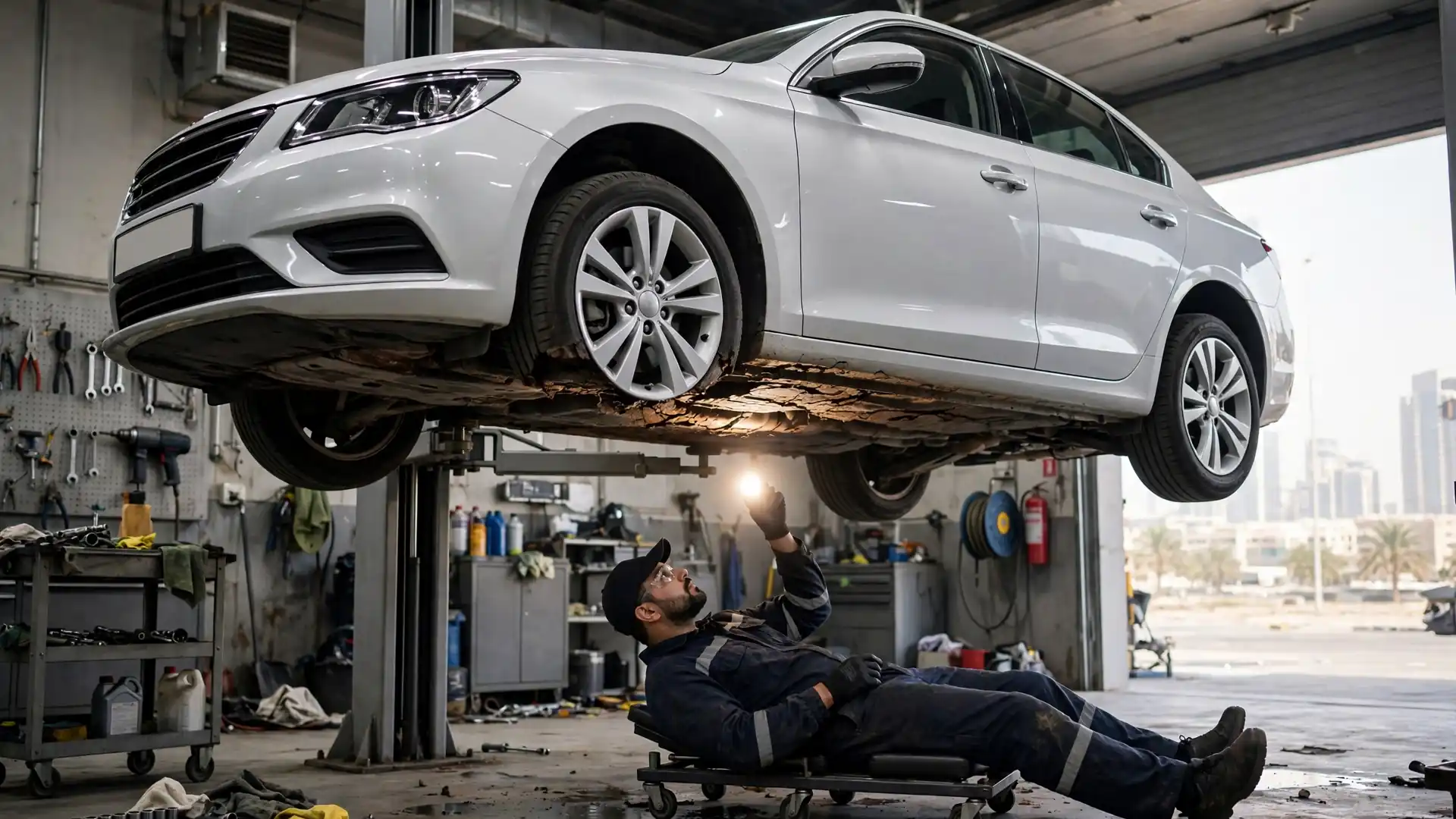
These signs do not prove that the car has been in a serious accident, but they should be checked. A professional inspection can examine visible structural areas, suspension mounting points, and other parts for signs of damage.
The mechanic may also use paint readings to identify repaired panels. If the car has had a major accident, ask for repair records and a detailed assessment. Do not rely only on the seller's description or a clean-looking exterior.
Check03Check the Tyres and Wheels
Tyres are important for braking, grip, and road safety. Check the tread across the full width of each tyre and look for cracks, cuts, bulges, or exposed cords. Uneven wear may point to incorrect tyre pressure, poor wheel alignment, worn suspension parts, or other issues.
Also check that the tyres are suitable for the car and that the fitted sizes meet the manufacturer's requirements.
Dubai's hot weather can speed up tyre ageing, especially when a car is often parked outdoors. Check the tyre date code where it is readable and look for signs of damage.
Do not judge tyre condition by tread depth alone. A tyre with enough tread can still be unsafe if it has cracks or sidewall damage. Ask a mechanic to assess any tyre that looks worn or unusual.
Check04Inspect the Engine Carefully
The engine is one of the most expensive parts to repair, so it needs careful attention. Open the bonnet and look for oil stains, coolant leaks, damaged hoses, cracked belts, and loose connections.
Check the engine oil and coolant levels if you know how to do so safely. Do not open the coolant cap while the engine is hot, as pressurised coolant can cause serious burns.
If possible, ask to see the car when the engine is cold. Notice whether it starts easily and runs smoothly. Listen for knocking, ticking, or rattling sounds that continue after starting.
Look at the exhaust for unusual smoke, but remember that its meaning depends on the cause and conditions. A mechanic may need to carry out further tests to confirm whether an engine problem exists.
Check for Oil and Coolant Leaks
Oil leaks may leave dark stains around the engine or beneath the parked car. Coolant leaks may leave coloured residue near hoses, the radiator, or the water pump. Low fluid levels can be a sign of poor maintenance or an active leak, although some leaks are difficult to see without lifting the car.
Ask the seller whether the car has needed frequent oil or coolant top-ups. A mechanic can inspect the cooling system, seals, hoses, and other accessible parts to look for leaks.
They may also check whether the engine shows signs of past overheating. Do not assume that a clean engine means there are no leaks, as the engine may have been cleaned before the sale.
Check05Test the Gearbox and Clutch
The gearbox should change gears smoothly and respond properly to the driver's input. For an automatic car, notice whether it moves into Drive and Reverse without a long delay or a strong jerk.
During the drive, check for slipping, sudden shifts, shaking, or unusual whining sounds. Some automatic gearboxes may feel different by design, so a mechanic should assess anything that seems unusual.
For a manual car, check whether the gears engage without excessive force and listen for grinding noises. The clutch should work smoothly without signs of slipping.
If the engine speed rises but the car does not gain speed as expected, the clutch may need attention. Gearbox repairs can be costly, so ask a specialist to inspect any warning signs before you agree to buy.
Check06Check the Brakes and Suspension
The brakes should slow the car smoothly and predictably. During a safe test drive, listen for grinding or squealing and notice whether the steering wheel shakes when you brake.
Check the brake warning light and ask a mechanic to inspect the brake pads, discs, fluid, and visible lines. Any serious braking fault should be fixed before the car is used on the road.
The suspension helps keep the car stable and comfortable. Listen for knocking sounds when driving over small bumps and notice whether the car pulls to one side or feels unstable.
Worn shock absorbers, damaged bushes, and loose joints can affect handling. These issues may also cause uneven tyre wear. A workshop inspection can help identify the faulty part and estimate the repair cost.
Check07Test the Air Conditioning System
A strong air conditioning system is important in Dubai, where cabin temperatures can rise quickly. Start the AC and allow it to run for several minutes.
Check whether the air becomes cold, whether the airflow is strong, and whether the system makes unusual noises. Test different fan speeds and temperature settings, and make sure the controls work as expected.
Weak cooling may be caused by low refrigerant, a leak, a faulty compressor, a blocked condenser, or an electrical problem.
Do not assume that adding refrigerant will solve the issue, as a leak may need repair first. Ask a mechanic to test the system if the cabin does not cool properly. A full AC check can help you understand whether the fault is minor or likely to need costly repairs.
Check08Test the Battery and Electrical Features
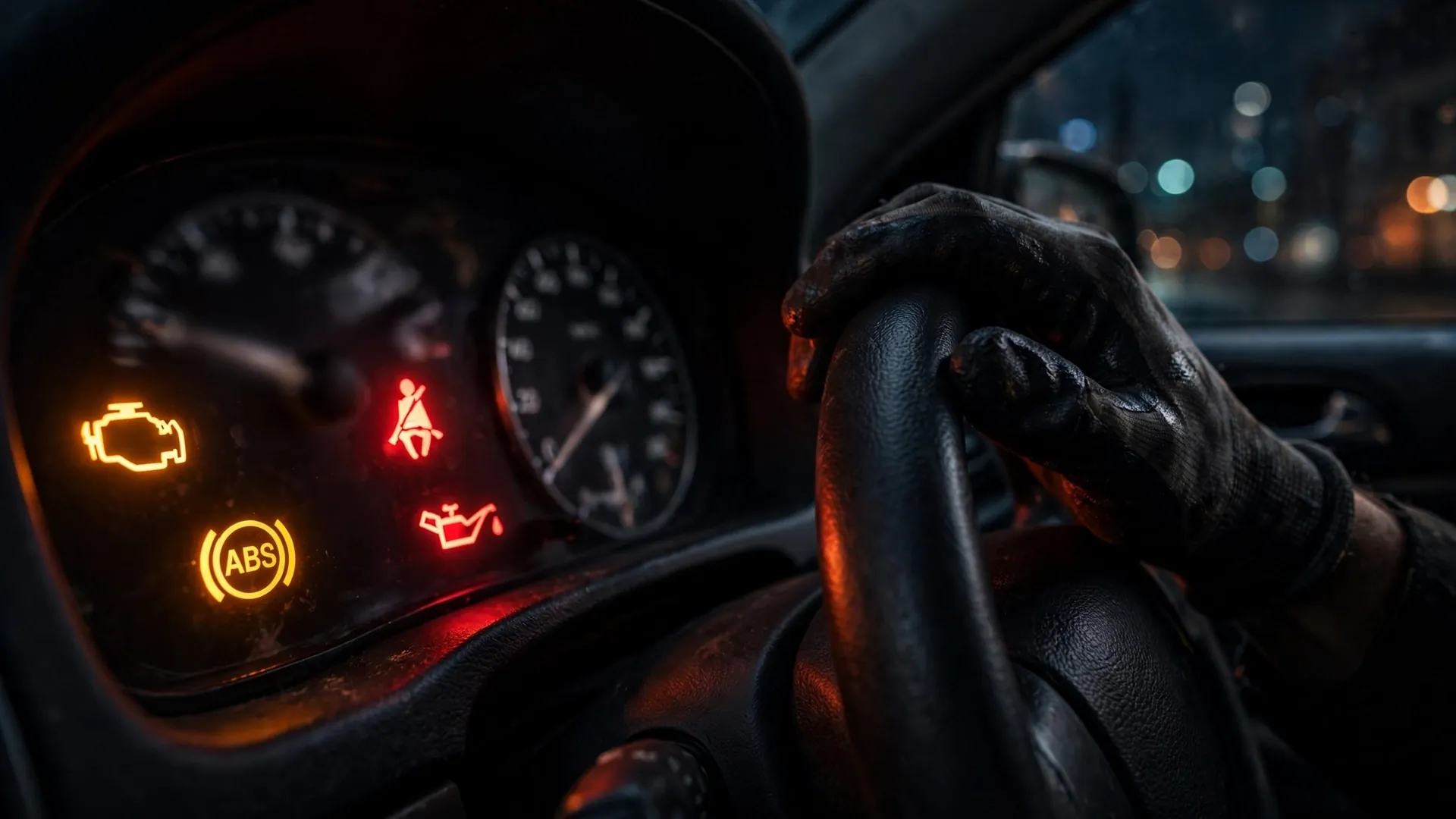
Modern cars rely on electrical systems for starting, lighting, engine control, safety features, and comfort. Turn the ignition on and check the dashboard lights.
After starting the engine, make sure warning lights behave as expected. Test the headlights, indicators, brake lights, power windows, mirrors, central locking, and infotainment system.
Also check the parking sensors, reversing camera, navigation, and other features fitted to the car. A weak battery may cause slow starting, while a charging problem can cause the battery to lose power again after replacement.
A mechanic can test the battery and alternator using suitable equipment. If several electrical features fail, the cause may be more complex than a single blown fuse.
Check09Scan for Hidden Fault Codes
Many cars store fault codes when their electronic systems detect a problem. These codes can relate to the engine, gearbox, airbags, anti-lock braking system, or other components. A mechanic can connect an OBD-II scanner or a suitable diagnostic tool to read the codes and check available system data.
A diagnostic scan is useful because some faults do not cause an obvious warning during a short test drive. However, a code does not always identify the exact failed part. It must be checked alongside the symptoms and other test results.
A mechanic may also review readiness monitors to see whether certain self-checks have been completed. A car with no active warning light can still have problems that need further testing.
Check10Check the Interior and Safety Features
The cabin can reveal how the car has been used and whether it has been cared for. Check the seats, seat belts, steering wheel, pedals, dashboard, carpets, and door trims.
Look for broken controls, damaged seat covers, unusual smells, damp carpets, or water marks. Excessive wear compared with the recorded mileage may be worth investigating.
Test the horn, seat belt locks, windows, mirrors, and other controls. Check that the airbag and ABS warning lights turn on as expected during the ignition check and then behave normally after starting.
A diagnostic scan can help identify faults in these systems. Never ignore an airbag warning, because it may mean that a safety system needs repair.
Check11Look for Signs of Flood Damage
Water damage can affect wiring, sensors, control units, carpets, and other parts. Some electrical problems may appear weeks or months after water enters the car.
Look for a musty smell, damp carpets, unusual rust around seat mounts, water marks, or mud in hidden areas. Pay attention to the boot and the space around the spare wheel as well.
These signs do not always prove that a car has been flooded, but they need a closer check. A mechanic can inspect accessible areas and scan the electrical systems for faults.
If the vehicle was imported, ask for its earlier history where available. A car may have been cleaned after water damage, so a clean cabin alone is not enough to confirm that it is safe.
Check12Take the Car for a Test Drive
A test drive lets you see how the car performs under normal driving conditions. Before moving off, adjust the seat and mirrors, fasten your seat belt, and make sure the route is safe.
Pay attention to how easily the engine starts, how the car accelerates, and whether the gearbox changes gears smoothly. During the drive, check the steering, brakes, suspension, and overall handling.
Listen for rattles, vibrations, or other unusual sounds. Notice whether the car pulls to one side or struggles to maintain a steady speed.
If the seller does not allow a test drive, ask why and consider arranging an inspection before going any further. A test drive should always be carried out with the owner's permission and appropriate insurance in place.
Check13Check the Car's Mileage and Overall Wear
Mileage can help you understand how much a car has been used, but it should not be the only factor in your decision.
A well-maintained car with higher mileage may be in better condition than a low-mileage car that has been neglected. Compare the odometer reading with available service records and inspection documents.
Look at the wear on the pedals, steering wheel, driver's seat, and door handles. If these parts look heavily worn while the mileage is unusually low, ask for an explanation.
Wear can vary with driving habits, so it is not proof of mileage fraud by itself. A professional inspection and reliable service records can help you assess whether the information appears consistent.
Check14Review the Inspection Findings Before Negotiating
Once you have checked the car, make a list of any problems you noticed. Separate urgent safety issues from normal wear and repairs that may be needed later.
For example, damaged tyres or weak brakes may need attention before regular use, while minor scratches may have little effect on safety. Ask a mechanic to confirm the issues and estimate likely repair costs.
Use these findings to discuss the price with the seller. You can ask for repairs to be completed before the sale or request a price that reflects the work needed.
If the car has major engine, gearbox, or structural problems, compare the repair cost with the price of another car. Do not feel pressured to buy simply because you have already spent time inspecting it.
Common Mistakes to Avoid When Inspecting a Used Car
Some buyers focus on the car's appearance, features, or price and forget to check its condition in detail. Others rely only on the seller's word or take a short test drive without reviewing the documents. These mistakes can lead to unexpected expenses after the purchase.
Avoid these common errors:
- Buying without checking the service history and available accident records.
- Ignoring dashboard warning lights or unusual engine and gearbox sounds.
- Checking the car only in poor lighting, where body damage may be harder to see.
- Assuming a clean interior means the car has been well maintained.
- Relying on a diagnostic scan without checking the mechanical parts.
- Skipping a professional inspection because the car feels fine during a test drive.
- Paying a deposit before confirming important details about the car and sale.
Taking your time helps you compare the car's condition with its price. If you are unsure about any major issue, get an independent mechanic to check it before making a final decision.
Why a Professional Pre-Purchase Inspection Is Worth It in Dubai
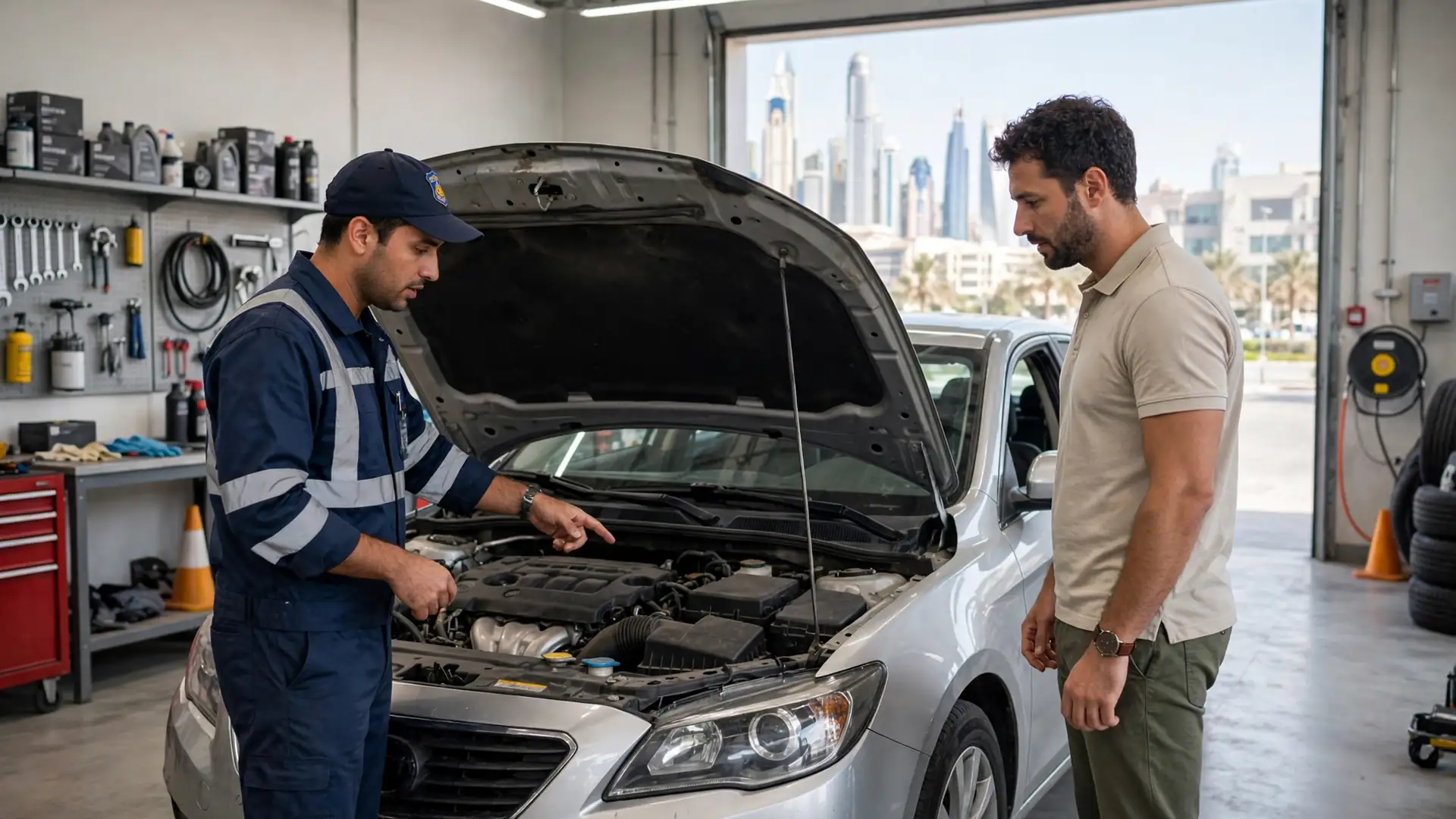
A personal check is useful, but it cannot replace the tools and experience of a trained mechanic. Some faults are hidden inside the engine, gearbox, electrical systems, or underbody.
A professional can inspect these areas, scan electronic systems, and explain which problems may affect safety or lead to high repair costs.
Dubai's heat also makes checks of the cooling system, battery, tyres, and AC especially important.
A professional report gives you more information to compare cars and negotiate with the seller. It cannot promise that a car will never develop a fault, but it can help reduce the chance of buying a vehicle with serious existing problems.
Conclusion: Inspect Before You Buy a Used Car in Dubai
To inspect a used car before buying in Dubai, start with its documents and service history, then check the bodywork, tyres, engine, gearbox, brakes, suspension, AC, and electrical systems.
Take the car for a safe test drive and look for signs of accident damage, flood exposure, and poor maintenance. These steps help you understand its condition before you spend your money.
However, some faults need specialist tools and mechanical knowledge to identify. A professional pre-purchase inspection can provide a more complete picture of the car's condition and highlight repairs that may affect your budget. Combine the report with available history records and a careful review of the sale documents before making your decision.
Planning to buy a used car in Dubai? Contact Pre Purchase Inspection to arrange a professional vehicle check before you make a payment. Get important parts inspected, learn about possible repair costs, and make a more informed choice with greater confidence.