Buying a used car in Dubai often happens fast. A good deal appears online, the seller has other buyers lined up, and you have one evening to decide. That pressure is exactly when costly faults get missed.
A used car inspection checklist for Dubai buyers should cover nine stages: questions before viewing, documents and history, body and paint, tyres and wheels, engine bay, interior and electronics, a computer scan, a road test, and the final paperwork for the RTA transfer. Working through each stage in order helps you spot red flags early and walk away before paying a deposit.
Why a Checklist Matters in Dubai
The UAE is one of the busiest used car markets in the region, with cars changing hands quickly between private sellers, dealers and auctions. Mileage fraud is a real risk. In May 2026, an Al Ain court cancelled a luxury car sale and ordered a Dh215,000 refund after finding the odometer had been rolled back by more than 68,000 km.
Dubai conditions add their own wear. Heat ages batteries, rubber seals, and tyres faster. Fine sand clogs filters, and long idling in traffic stresses cooling systems and AC. A checklist built for these conditions catches problems a generic list misses.
Stage 1: Before You View the Car
Ask the sellerGCC spec or imported?
- Why it matters
- Imports may have unknown history or different specs
Ask the sellerAny accidents or insurance claims?
- Why it matters
- Their answer is worth comparing with the inspection
Ask the sellerFull service history available?
- Why it matters
- Gaps can hide neglect or mileage issues
Ask the sellerAny warning lights on the dashboard?
- Why it matters
- Saves a wasted trip
Ask the sellerIs the registration valid and loan cleared?
- Why it matters
- A car under finance needs bank clearance before transfer
Ask the sellerCan you take it for a road test and inspection?
- Why it matters
- A refusal is a red flag
Stage 2: Documents and History
CheckRegistration card (Mulkiya)
- What to look for
- Name and VIN match the car
- Red flag
- VIN mismatch or a different owner
CheckVIN on the car
- What to look for
- Plates on dashboard, door pillar and chassis
- Red flag
- Missing, damaged or altered plates
CheckService records
- What to look for
- Stamps and invoices at regular intervals
- Red flag
- Long gaps or no records
CheckMileage history
- What to look for
- Readings rise steadily across invoices
- Red flag
- A reading lower than an earlier one
CheckFines and finance
- What to look for
- Fines cleared, no active bank lien
- Red flag
- Unpaid fines or finance on the car
Stage 3: Body and Paint
CheckPanel gaps
- What to look for
- Even gaps along doors, bonnet and boot
- Red flag
- Wider gaps on one side
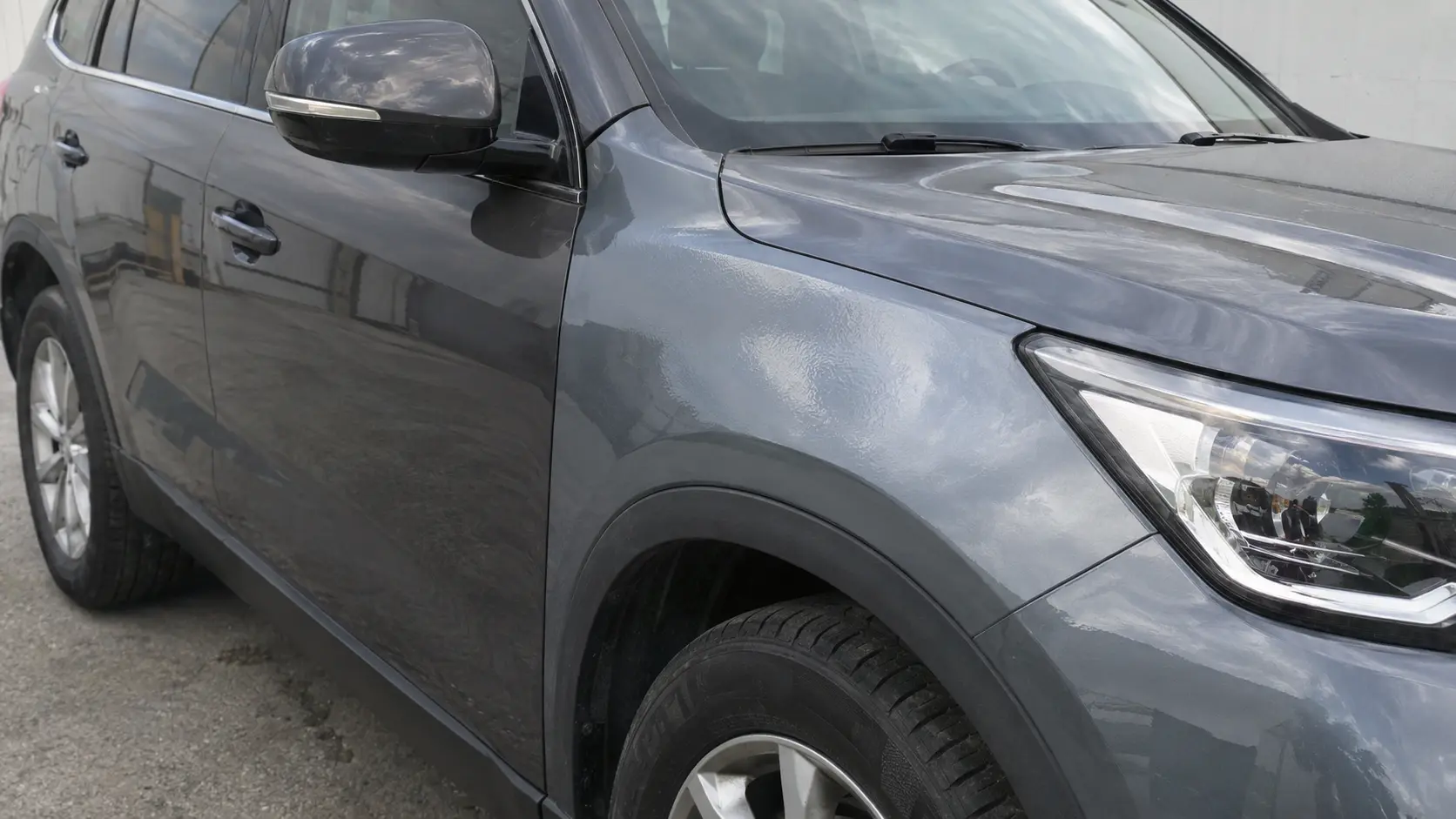
CheckPaint colour and finish
- What to look for
- Same shade and texture on every panel
- Red flag
- Duller or orange-peeled panels
CheckOverspray
- What to look for
- Clean rubbers, trims and glass edges
- Red flag
- Paint mist on seals or badges
CheckBolts on wings and doors
- What to look for
- Factory paint untouched
- Red flag
- Spanner marks or chipped paint
CheckUnderbody
- What to look for
- Even surface rust at most
- Red flag
- Fresh welds, kinked rails, heavy rust
CheckGlass date codes
- What to look for
- Similar dates on all windows
- Red flag
- One window much newer
Uneven readings on a paint gauge are the clearest proof of repair work, and the full list of body repair signs goes deeper than a quick walk-around.
Stage 4: Tyres and Wheels
CheckTread depth
- What to look for
- Even wear across the width
- Red flag
- Inner or outer edge worn
CheckDate code
- What to look for
- DOT code on the sidewall under 5 years old
- Red flag
- Old tyres with plenty of tread
CheckSidewalls
- What to look for
- No cracks or bulges
- Red flag
- Cracking from heat
CheckRims
- What to look for
- Straight, no deep kerb damage
- Red flag
- Bent or welded rims
CheckMatching set
- What to look for
- Same brand and size on each axle
- Red flag
- Mixed tyres on one axle
Stage 5: Under the Bonnet
CheckEngine oil
- What to look for
- Clean level on the dipstick
- Red flag
- Milky oil or very low level
CheckCoolant
- What to look for
- Correct level and colour
- Red flag
- Oil in coolant, crusty residue
CheckLeaks
- What to look for
- Dry engine and gearbox
- Red flag
- Fresh oil or coolant drips
CheckBelts and hoses
- What to look for
- No cracks, firm hoses
- Red flag
- Cracked belts, swollen hoses
CheckBattery
- What to look for
- Clean terminals, recent date
- Red flag
- Corrosion, very old battery
CheckCold start
- What to look for
- Smooth start, quiet idle
- Red flag
- Rattles, smoke, slow cranking
Never open the coolant cap on a hot engine.
Stage 6: Interior and Electronics
CheckAC
- What to look for
- Cold air within a few minutes at idle
- Red flag
- Weak cooling or bad smell
CheckWarning lights
- What to look for
- All lights on at start, then off
- Red flag
- Lights that stay on or never show
CheckSeats and wear
- What to look for
- Wear matches the mileage
- Red flag
- Worn pedals on a low-mileage car
CheckElectrics
- What to look for
- Windows, locks, mirrors, screen and cameras work
- Red flag
- Dead features or flickering screens
CheckFlood signs
- What to look for
- Dry carpets, no musty smell
- Red flag
- Damp carpets, rust on seat rails, silt
CheckAirbags and belts
- What to look for
- Covers intact, belts retract
- Red flag
- Airbag light on, damaged covers
Stage 7: Computer Scan
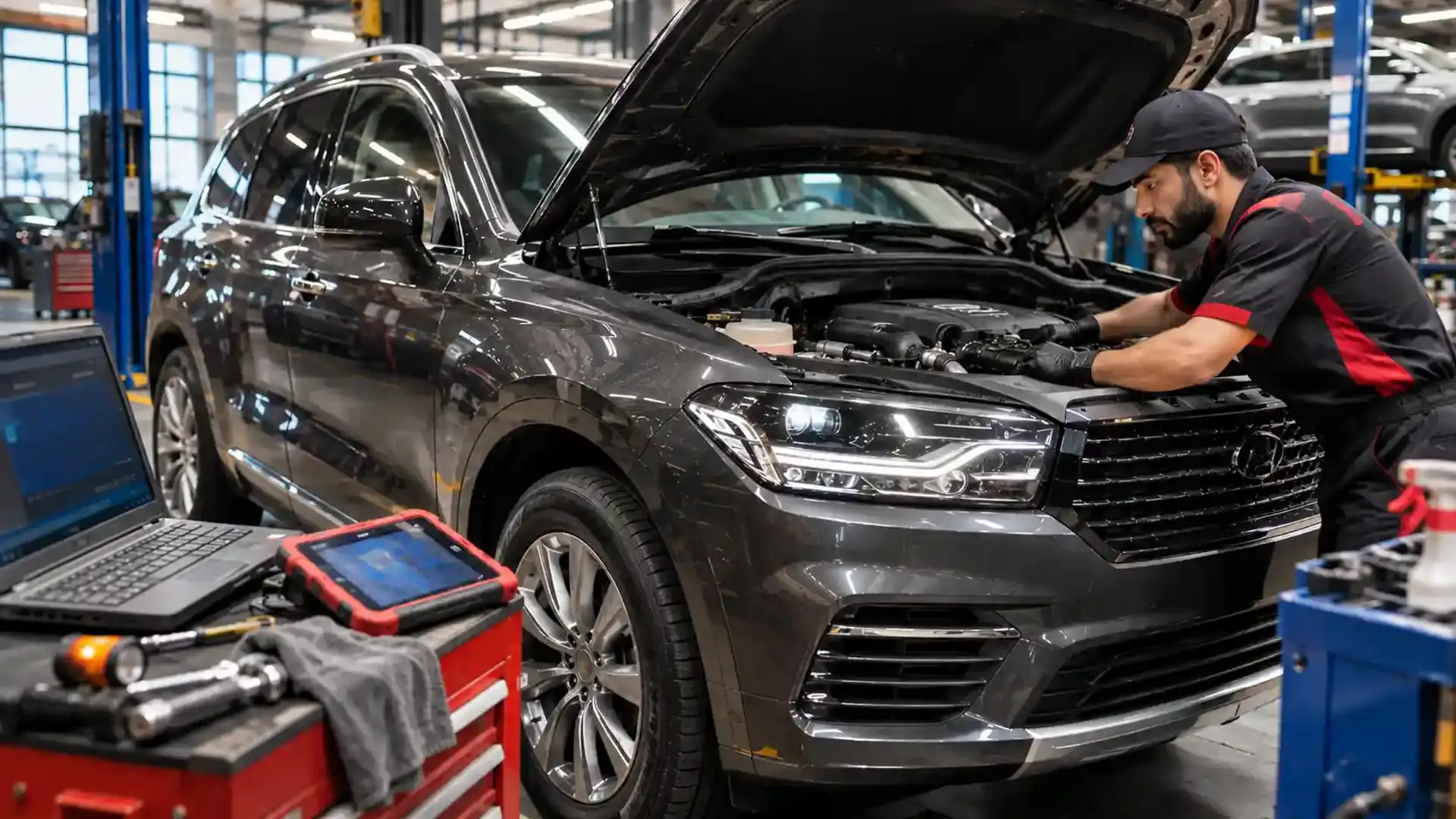
A scan reads stored fault codes from the engine, gearbox, ABS, airbag and other modules. Good scanners also compare the mileage stored in different modules with the odometer. A mismatch is one of the strongest signs of rollback.
CheckEngine and gearbox codes
- Red flag
- Stored misfire, slip or limp-mode codes
CheckABS and airbag modules
- Red flag
- Crash data or airbag faults
CheckMileage across modules
- Red flag
- Different readings between modules
CheckReadiness monitors
- Red flag
- Recently cleared codes hiding faults
Stage 8: Road Test
CheckGearbox
- What to look for
- Smooth, quick shifts
- Red flag
- Slipping, jerks, delayed reverse
CheckEngine
- What to look for
- Steady pull under load
- Red flag
- Hesitation, smoke, overheating
CheckBrakes
- What to look for
- Straight, smooth stops
- Red flag
- Pulling or pulsing pedal
CheckSteering
- What to look for
- Centred wheel, straight tracking
- Red flag
- Drift or crooked wheel
CheckSuspension
- What to look for
- Quiet over bumps
- Red flag
- Knocks, clunks, bouncing
CheckNoise at speed
- What to look for
- Calm cabin at 100 km/h
- Red flag
- Humming from wheel bearings
Aim for at least 20 to 30 minutes of mixed driving. A proper road test catches faults that a parked check never will.
Stage 9: Paperwork and RTA Transfer
StepVehicle test if required
- Typical cost
- AED 150 plus AED 20 fee for a light vehicle
StepOwnership transfer
- Typical cost
- AED 350
StepNew number plates if needed
- Typical cost
- Varies by plate type
StepInsurance in the buyer's name
- Typical cost
- Varies by car and cover
Pay only once the car passes, the loan is cleared and the transfer is booked. Keep copies of the sale agreement, invoices and the inspection report.
Red Flags That Mean Walk Away
- Seller refuses an inspection or road test
- VIN on the car does not match the documents
- Mileage in the computer differs from the dashboard
- Filler readings above 500 microns or welds on chassis rails
- Gearbox slips or the engine overheats
- Signs of flood damage under carpets or seats
Many of these match the wider inspection red flags that professional inspectors look for on Dubai cars.
When to Call a Professional
This checklist helps you shortlist cars and spot obvious problems. It cannot measure paint depth on every panel, read every control module or judge how worn a gearbox really is. A professional pre-purchase inspection covers 150 points, scans 20 or more modules where supported, measures paint on every panel and road tests the car on 8 parameters, all in about 60 to 90 minutes.
Brand matters too. Premium cars such as Range Rover, Mercedes or Porsche have their own weak points, so a German car or premium inspection should follow brand-specific checks.
Frequently Asked Questions
What should I check first when buying a used car in Dubai?
Start with the documents. Make sure the VIN on the car matches the registration and that the loan and fines are cleared. If the paperwork fails, there is no need to go further.
How can I check if a used car's mileage is real?
Compare the odometer with service invoices and with wear on the seat, pedals and steering wheel. A computer scan can also compare mileage stored in different modules. Any mismatch needs a clear explanation.
Can I inspect a used car myself?
Yes, this checklist covers the main visual and driving checks. However, tools like paint gauges and diagnostic scanners find faults you cannot see. A professional inspection adds that depth.
How long does a used car inspection take?
A careful self-check with a road test takes about an hour. A professional pre-purchase inspection takes 60 to 90 minutes. The report usually arrives the same day.
What paperwork do I need to transfer a used car in Dubai?
Both parties need valid Emirates ID, and the car needs valid registration and insurance in the buyer's name. Any bank loan must be cleared first. The transfer is completed through the RTA with the required fees.
Conclusion
A used car inspection checklist for Dubai buyers turns a rushed decision into a step-by-step process. Working through documents, body, tyres, engine, interior, scan, road test, and paperwork in order catches most hidden problems before money changes hands. The red flags list tells you when to walk away.
Want every item on this checklist covered by an expert? Book a mobile pre-purchase inspection with Pre-Purchase Car Inspection Dubai. Our inspectors come to the car anywhere in Dubai, 7 days a week from 8 AM to 8 PM, and send a same-day digital report with photos, an AED repair estimate, and a clear buy, negotiate, or walk-away verdict.